Guides · 15 August 2026 · 5 min read
Metal lives forever: how scrap becomes new steel
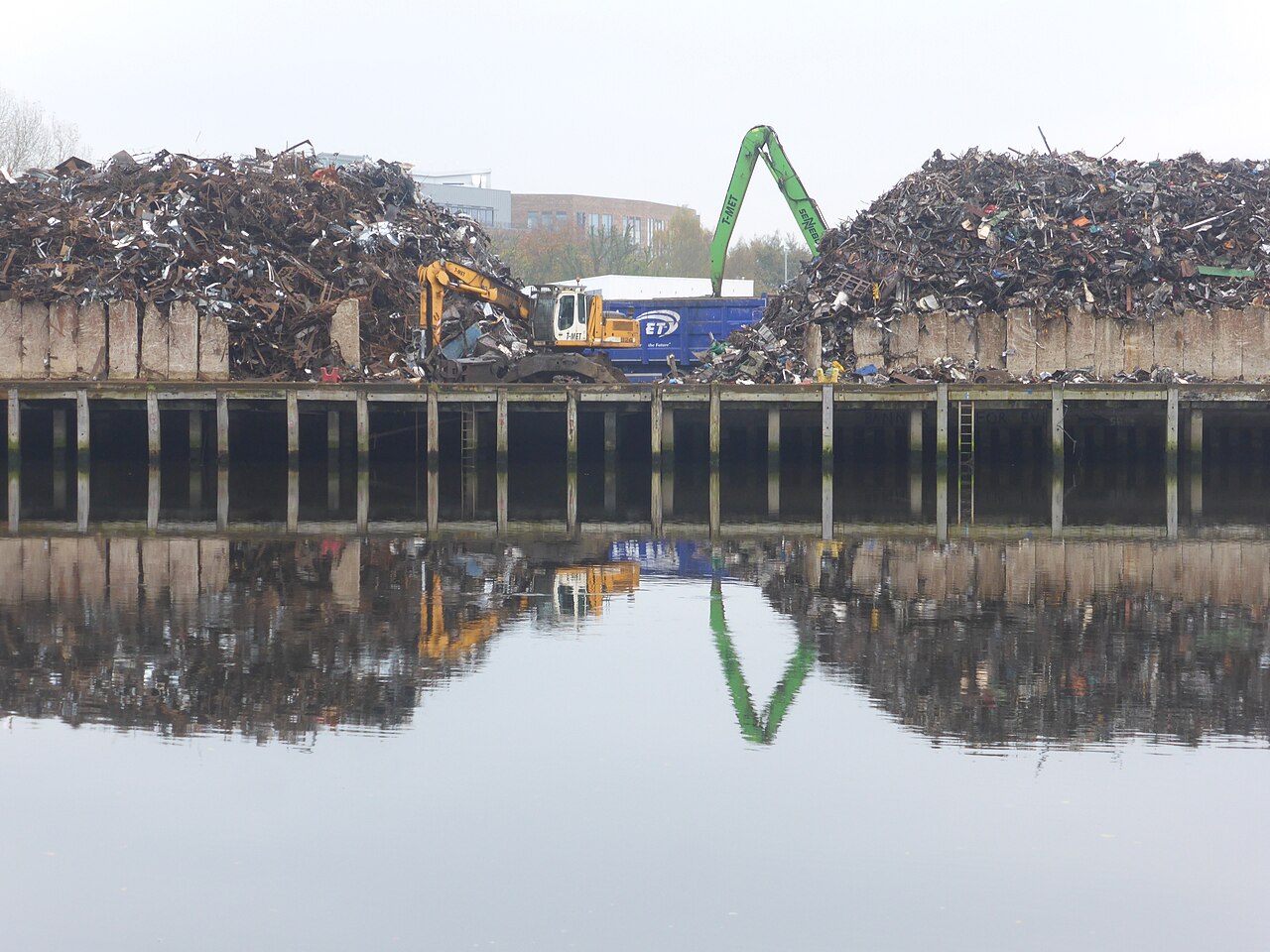
Here is the most cheerful fact in the whole waste industry: metal does not wear out. A steel bed frame can become a car panel, then a tin can, then a bridge bolt, forever, with no loss of quality. Aluminium is even better, remelting it uses around 95 percent less energy than smelting new metal from ore. When people ask which recycling actually works, the answer is metal, spectacularly, and it has for a century.
From your house to the yard
Metal from WasteSpeed loads, bed frames, radiators, filing cabinets, appliance carcasses, bikes, goes to scrap metal merchants like the ones in the photo above. It is weighed, graded and sold by the tonne. Scrap is a genuine global commodity: the UK exports millions of tonnes of it a year, and a "waste" steel radiator is, to a merchant, simply steel that happens to be radiator-shaped.
The shredder and the sorting tricks
Mixed scrap goes through a shredder that reduces a washing machine to fist-sized fragments in seconds. Then the separation begins, and it is elegant. Giant magnets pull out the steel. An eddy current separator, a fast-spinning magnetic rotor, makes aluminium literally jump off the conveyor while everything else falls straight down. Density baths float plastics away from copper. What arrives as a tangled appliance leaves as clean, single-metal streams.
Why this matters for your booking
An average washing machine is over half steel. A double mattress holds about 12.5kg of spring steel. A cast iron radiator is 30 to 50kg of directly remeltable iron. When these go to landfill, that metal is buried at exactly the moment steelmakers are trying to cut their carbon by using more scrap. Separating metal is the easiest big win in the whole system, which is why it is the first thing pulled out of every load we sort.
Reuse first, recycling second, energy recovery third, landfill last. That order, every load.
Ready for it to be gone?
Check your postcode, pick your route day, done in two minutes.